Important does my child have sleep apnea quiz Signs & Guide
Does My Child Have Sleep Apnea? Signs Symptoms Causes and Treatment Guide
Introduction to the Literature
does my child have sleep apnea?” is a keyword that is often searched by parents who are concerned about their child’s sleep quality and breathing patterns at night. Parents often spot signs like loud snoring, breaks in breathing, restless sleep, mouth breathing, daytime tiredness or peculiar behaviour and begin searching for quick answers online.
When someone searches for does my child have sleep apnea quiz they are typically looking for an online self-assessment quiz or screening tool to determine whether their child can have signs of sleep apnoea. They are often looking for information about common symptoms such as loud snoring, pauses in breathing during sleep restless sleep, and daytime tiredness mouth breathing behavioural problems or difficulty focusing. does my child have sleep apnea quiz
Most users want an easy way to find out if their child’s symptoms are potentially indicative of paediatric sleep apnoea and if they should seek out a doctor paediatrician or sleep specialist for further assessment. They also may be looking for causes risk factors diagnosis methods and treatment options of childhood sleep apnea. does my child have sleep apnea quiz
In this article we will discuss all about paediatric sleep apnoea including symptoms warning signs risk factors diagnosis and treatment and help parents to understand if a sleep apnoea quiz can be helpful. does my child have sleep apnea quiz
Sleep Apnoea Quiz Does My Child Have It?
The keyword “does my child have sleep apnea quiz” is for online quizzes or screening tools that can help parents determine if their child has symptoms of sleep apnea.
Typically, these quizzes ask questions on:
- Loud Snore
- Breathing pauses during sleep
- Sleepless night
- Mouth breathing
- Headaches in the morning
- Daytime tiredness
- Difficulty concentrating
- Hyperactivity or mood swings
These quizzes are not medical diagnoses, but may help parents decide if a professional evaluation is needed.
What is Childhood Sleep Apnoea?
Paediatric sleep apnoea is a sleep disorder that is marked by an interruption in breathing or a decrease in airflow during sleep in a child.
These breaks in breathing can last a few seconds and can occur many times during the night.
does my child have sleep apnea quiz”
There Are Two Main Types
Obstructive Sleep Apnoea
This happens when the airway is partly blocked or fully blocked.
Common culprits include:
- Enlarged tonsils
- Big adenoids
- Fatness
- Tight airway
Central Sleep Apnoea (CSA)
It occurs when the brain stops sending the correct signals to breathe.
This type is less common in kids.
For medical information about pediatric sleep apnea visit the American Academy of Sleep Medicine.
Why Parents Search Quiz Does My Child Have Sleep Apnea?”
This is a common keyword searched by parents because symptoms can be confusing.
Many kids with sleep apnea don’t just seem sleepy.
Instead they may behave strangely.
Typical concerns include:
- Child is a loud snorer every night
- Baby stops breathing while sleeping
- Frequent child waking
- Child looks tired even though they slept enough
- Struggling School Child
- Child has mood swings
A quiz sounds like a quick first step before making an appointment with a doctor.
Common Symptoms Of Sleep Apnoea In Kids
Early recognition of symptoms is important.
Night Symptoms
These symptoms happen while sleeping:
- Loud snoring
- Gasping for breath
- Breathe in breathe out
- Restless sleep
- Frequent awakenings
- Night sweats
- Bedwetting
- Mouth breathing
Symptoms of the Day
These are symptoms that occur during the day.
- Feeling tired in the daytime
- Irritability
- Overactivity
- Lack of concentration
- Memory problems
- Difficulties in learning
- Headaches in the morning
Sometimes children may seem to be hyperactive instead of sleepy.
According to Mayo Clinic, symptoms like loud snoring and breathing pauses should not be ignored.
Fast Sleep Apnoea Quiz for Parents
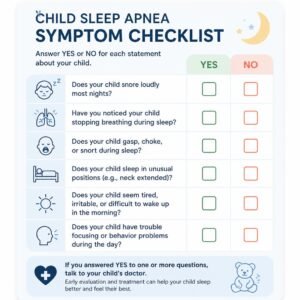
Try this easy screening test.
Yes or No.
Questions
- Is your child a loud snorer on most nights?
- Do you find yourself stopping breathing while sleeping?
- Does your kid choke or gasp in his sleep?
- Is your child a restless sleeper?
- Does your child often breathe through his or her mouth?
- Is your child sleepy upon waking?
- Is your child tired during the day?
- Is your child having trouble focusing?
- Does your child have hyperactive behaviour?
- Does your child have frequent headaches in the morning?
Quiz Results
0 to 2 Yes
Low risk, but continue to follow.
3 to 5 affirmative answers
Average risk. Consult a paediatrician.
6 or more Yes responses
Highrisk. Professional evaluation is strongly advised.
Remember that this quiz is a screening tool only.
Causes of Sleep Apnoea in Children
There are a number of risk factors.
Enlarged Adenoids and Tonsils
It is the commonest cause in children.
Large tonsils can block air flow during sleep.
Obesity
Excess weight can narrow the airway passages.
This compounds the problems with breathing.
Family History
Sleep apnoea can be inherited.
Genetics can influence airway architecture.
Health Issues
Conditions that put you at higher risk of developing:
- Down’s syndrome
- Cerebral palsy
- Neuromuscular diseases
- Craniofacial anomalies
Risk Elements
Children may be at greater risk if they have:
- Long-term allergies
- Bronchitis
- Fatty
- Congestion often
- Large tonsils
- Sleep disorders in the family history
When you know the risk factors, parents can act earlier.
Why You Shouldn’t Ignore Sleep Apnoea
The effect of untreated sleep apnoea can touch many areas of life.
Possible complications are:
Lack of Academic Achievement
Sleep affects learning and memory.
Getting enough sleep is important for how well you do in school.
Behavioural Issues
Sleep deprivation may lead to:
- Irritability
- Anger
- Hyperactivity
- Emotional lability
Growth Issues
Poor sleep affects growth hormones.
That can hamper development.
Heart Trouble
Untreated severe cases may have an impact on cardiovascular health.
That’s why early treatment matters.
Read more about child sleep disorders on Healthline.
Diagnosing Sleep Apnoea in Doctors
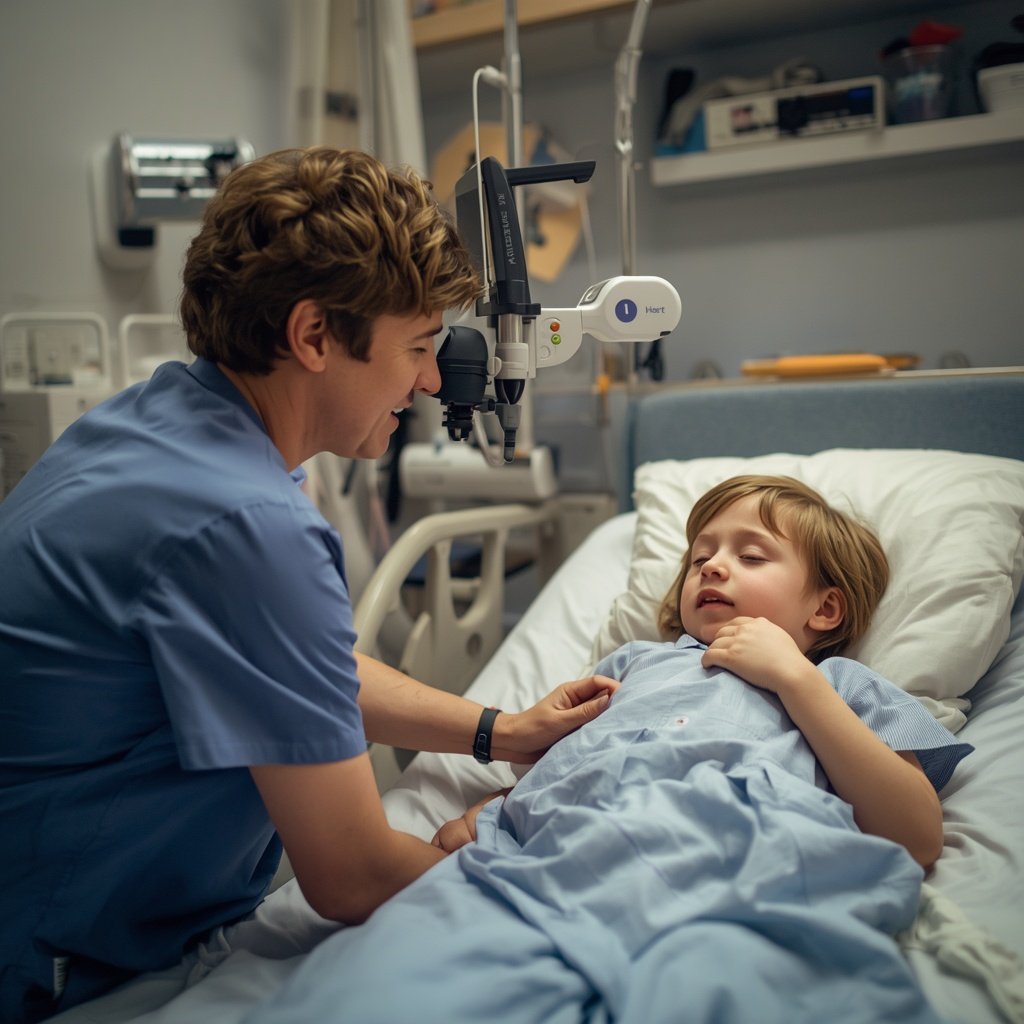
Testing may be recommended by a doctor if symptoms are concerning.
Physical Exam
The doctor looks at:
- Tonsils
- Airway
- Weight
- Nasal congestion
Sleep Research
The gold standard is a polysomnography.
This test measures:
- Breathing
- Oxygen concentrations
- Heartbeats
- Sleep phases
Helps confirm diagnosis.
Professional Evaluation
A child might be referred to:
- Pediatrician
- Otorhinolaryngologist
- Sleep Specialist
- Parents can learn about sleep studies from Cleveland Clinic.
Therapeutic Options
Treatment depends on the cause and severity.
Removal of Tonsils and Adenoids
It’s one of the most frequently used therapies.
Frequently, removal of enlarged tonsils will improve breathing.
Weight Control
Weight loss might be helpful for overweight children.
Good habits improve sleep quality.
CPAP Treatment
CPAP is a constant flow of air pressure while you sleep.
This keeps airways open.
It is used in moderate to severe cases.
Allergy Treatments
Allergies can cause swelling of the airways. Treatment can reduce this swelling.
For example:
- Nasal Spray
- Allergy medications
- Humidifiers
- Treatment information is available on Johns Hopkins Medicine.
Can Sleep Apnoea Go Away
Sometimes.
Mild cases may get better as children grow up.
But many children need treatment.
Do not expect symptoms to resolve spontaneously.
Seek medical advice if symptoms persist.
How to Help Your Child Get Better Sleep

Parents can help foster healthy sleep habits.
Some tips that may help:
- Keep a regular sleep schedule
- Limit screen time before bed
- Keep bedroom silent
- Promote side sleeping
- Encourage healthy weight
- Treat allergies promptly
Good sleep habits mean better health.
When to See Your Doctor
You should see a doctor if:
- Snoring occurs regularly
- Breathing pauses are apparent
- Child appears tired all the time
- Drop in school results
- Behaviour shifts suddenly
These signs shouldn’t be ignored.
Why Online Quizzes Are So Popular
Parents love quizzes, because they are:
- Quick
- Free
- Easy to comprehend
- Good to be aware of the symptoms
But quizzes can not replace medical testing.
They just help to spot possible warning signs.
You may also like MACSA Bible Quizzing Guide → /macsa-bible-quizzing/
Frequently Asked Questions
What does my child have sleep apnea quiz
It is an online screening quiz to help parents identify signs of sleep apnoea in children.
Could a quiz diagnose sleep apnea?
No. Sleep apnoea can only be diagnosed by a doctor or sleep specialist.
What is the most frequent symptom
One of the most common symptoms is loud snoring.
Sleep apnoea is dangerous for children
Yes, untreated sleep apnoea can affect behaviour, learning, growth and overall health.
What if my child has symptoms
Schedule an assessment with a paediatrician or sleep specialist.
In Summary
A sleep apnoea quiz for children is often the first step parents take when they notice abnormal sleep behaviours in their kids. Online quizzes can be helpful in identifying warning signs, but they are not a replacement for a professional medical assessment.
If your child snores loudly, stops breathing, sleeps badly or is tired during the day, it’s worth a visit to a healthcare professional. does my child have sleep apnea quiz. Early diagnosis and treatment can help you learn better sleep behaviours and improve your long-term well-being.
Explore more trending educational guides in UGGWorldTech Gaming Trends → /uggworldtech-gaming-trends-by-undergrowthgames/